

















Who Is Manish Brahmbhatt and Why Has He Launched CJP-D Against Abhijeet Dipke's CJP?
Who is Manish Brahmbhatt? Know his CJP connection, dispute with Abhijeet Dipke and why he launched Cockroach Janta Party-Democratic (CJP-D).
The Cockroach Janta Party (CJP) now has a new challenge, and this time it is coming from someone who claims to have been part of the same movement.
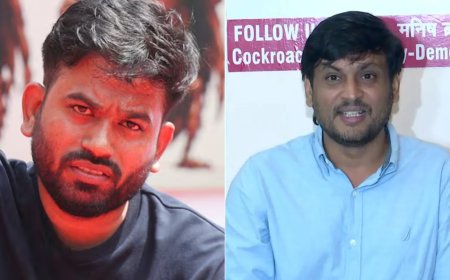
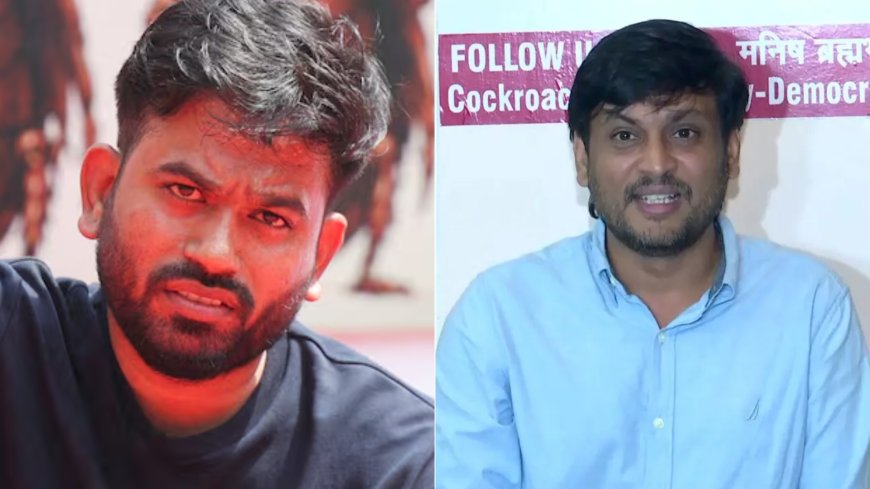
Activist Manish Brahmbhatt announced the launch of the Cockroach Janta Party-Democratic (CJP-D) on September 3. He says the new platform will work with transparency, accountability and a democratic system where volunteers get a say in important decisions.
But CJP-D has not appeared out of nowhere.
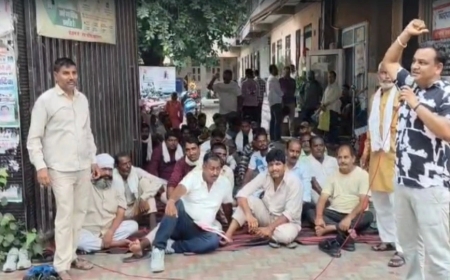
Brahmbhatt had already been openly questioning Abhijeet Dipke and the way CJP was being run. In August, he and Rahul Pandya protested outside Dipke's residence and went on an indefinite hunger strike. Now, less than a month later, Brahmbhatt has announced a separate platform.
So who is Manish Brahmbhatt, what is his connection with CJP, why did he turn against Dipke's team, and what does CJP-D actually want to do? Here is what we know so far.
Who Is Manish Brahmbhatt?
Manish Brahmbhatt is an activist who has come into wider public attention because of his differences with the Abhijeet Dipke-led Cockroach Janta Party.
There is still limited verified information available in the public domain about his education, profession and personal background. Most of the recent coverage around him is connected with CJP, his protest against Dipke and the launch of CJP-D.
Brahmbhatt claims that he was connected with the movement that grew around CJP and its Jantar Mantar protest. He has presented himself as one of the people who supported the movement before differences emerged over how it was being managed.
However, his exact role in the original CJP movement is disputed.
Reports have cited people from the CJP side as questioning his connection with the movement. Brahmbhatt, on the other hand, maintains that he and other volunteers were involved and later ignored when important decisions were taken.
This disagreement is important because much of Brahmbhatt's criticism of CJP is based on his claim that people who worked for the movement were not given a proper role when a national team was formed.
The Dispute Did Not Start With CJP-D
The differences between Brahmbhatt and Dipke's team had become public weeks before CJP-D was announced.
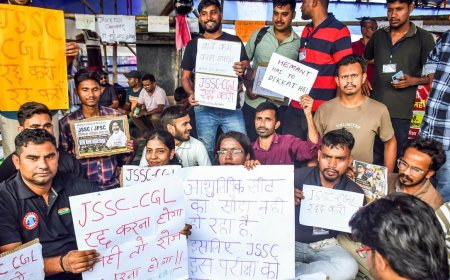
In August, Brahmbhatt and Rahul Pandya protested outside Abhijeet Dipke's residence. The two went on an indefinite hunger strike and questioned the way CJP was being run.
Reports at the time said their health later worsened and they had to be taken to hospital.
The protest showed that there was already disagreement around the movement's leadership and organisation.
The launch of CJP-D on September 3 has now taken that disagreement to another level.
Instead of only demanding changes within CJP, Brahmbhatt has decided to build a separate platform.
What Is Cockroach Janta Party-Democratic or CJP-D?
Cockroach Janta Party-Democratic is a new platform announced by Manish Brahmbhatt.
While announcing CJP-D, Brahmbhatt said people would be able to connect with the organisation through its social media accounts, WhatsApp and a missed-call number.
He said the aim is to build a national team through a democratic process instead of allowing a small group to make all major decisions.
Transparency and accountability are at the centre of his pitch.
Brahmbhatt says people who join the organisation should have a voice in how it works and that accountability should apply not only to governments but also to the people running a movement.
For now, however, CJP-D is a newly announced platform. How its leadership will actually be selected and how much support it can build will become clearer only with time.
Why Did Manish Brahmbhatt Launch CJP-D?
Brahmbhatt's main complaint is about what happened after the original CJP movement gained public support.
He alleges that volunteers and protesters who helped the movement were not properly consulted when CJP formed its national team.
According to Brahmbhatt, the team should have represented people from different states, especially those who had actively participated in protests and worked as volunteers.
Instead, he has alleged that a small group selected the leadership.
He has also claimed that several people associated with the Aam Aadmi Party (AAP) were included in the team.
These are allegations made by Brahmbhatt. They have not been independently established as facts.
What Is the 'Team Kejriwal' Allegation?
One of Brahmbhatt's biggest attacks on the original CJP is that the movement has become too close to Arvind Kejriwal and the Aam Aadmi Party.
While announcing CJP-D, he argued that CJP should remain a people's movement rather than becoming centred around an individual or another political group.
He accused Dipke and his team of turning the movement into what he called "Team Kejriwal".
The allegation comes at a time when CJP's relationship with AAP has already attracted attention.
Arvind Kejriwal appeared with Abhijeet Dipke during the CJP protest at Jantar Mantar in July, and questions about the relationship between CJP and AAP have since been discussed publicly.
Brahmbhatt's argument is that a movement built around accountability should be ready to question any government or political party.
According to him, CJP-D intends to speak against corruption regardless of which party is in power.
That is the position Brahmbhatt is presenting. Whether CJP-D follows that approach in practice will only become clear as the organisation begins its work.
Why Is the 12-Member CJP Team Being Questioned?
Another major part of Brahmbhatt's criticism concerns the formation of CJP's team.
He has alleged that Dipke and others created a 12-member team without properly consulting volunteers who had participated in the movement.
Brahmbhatt claims that people connected through protests and social media should have been asked for their views before such a team was formed.
He has also alleged that eight members of the team had links with AAP and that personal acquaintances were included.
Again, these claims come from Brahmbhatt and should not be treated as proven facts unless supported by independent evidence.
But the allegations explain why he is putting so much emphasis on the word "Democratic" in the name of his new platform.
His argument is simple: if a movement asks the government to be transparent and accountable, its own internal decisions should also meet the same standard.
Brahmbhatt Has Also Raised Questions Over a Volunteers' Meeting
Brahmbhatt has made another allegation about a meeting involving CJP volunteers in Delhi.
He claims that mobile phones of participants were taken away so that the proceedings could not be recorded.
He has used this claim to question whether decisions within the organisation were being taken transparently.
There is no independent confirmation available for this allegation, so it needs to be viewed as Brahmbhatt's version of events.
Still, it forms an important part of his explanation for launching a separate platform.
How Did CJP Become Such a Big Movement?
To understand why this split matters, it is necessary to look at how quickly CJP grew.
The Cockroach Janta Party started as an online movement led by Abhijeet Dipke and soon found support among young people.
Its campaign focused on issues such as competitive examinations, alleged irregularities, unemployment and accountability.
The movement then moved from social media to the streets.
In June, CJP supporters gathered at Jantar Mantar in Delhi, where the organisation continued its protest demanding the resignation of then Union Education Minister Dharmendra Pradhan.
Students, young professionals and other supporters participated in the demonstrations.
The protests gave CJP visibility beyond social media and turned Dipke into a nationally recognised face of the movement.
With that growth, however, came greater scrutiny over who was running CJP, how decisions were being taken and whether the organisation had links with established political parties.
CJP-D has emerged in the middle of those questions.
Is CJP-D a Political Party?
The name can create some confusion.
CJP-D is being described as a new political platform or faction in current reports, but announcing an organisation with the word "Party" in its name does not by itself establish that it is a registered political party with the Election Commission of India.
At this stage, the important development is that Brahmbhatt has publicly launched CJP-D, announced ways for people to join and explained the principles on which he says the organisation will work.
Its formal structure, leadership and future political plans will need to be watched separately.
What Is the Main Difference Between CJP and CJP-D?
On the surface, both groups speak about many of the same issues: corruption, accountability and people's participation.
The main difference being presented by Brahmbhatt is about how the organisation itself should operate.
His criticism is that CJP has moved away from the people who helped build the movement and has become politically influenced.
CJP-D is being presented as an alternative where members will have more involvement in choosing the team and taking decisions.
But at the moment, that difference is largely based on promises.
CJP-D will have to show through its own working system that its decision-making is as open and democratic as Brahmbhatt says it will be.
What Does CJP-D Mean for Abhijeet Dipke?
For Dipke, the launch of CJP-D creates a different kind of challenge.
Until now, much of the attention around CJP came from its campaigns, its political stand and questions surrounding Dipke himself.
Now there is also a group challenging CJP on the same issues of transparency and accountability that helped the original movement attract supporters.
That does not automatically mean CJP-D will become a serious rival.
CJP already has public recognition, a social media presence and the advantage of being associated with the movement from its early days.
Brahmbhatt's group is starting from a much earlier stage.
Its future will depend on whether volunteers actually move towards CJP-D and whether the organisation can build a presence outside the current controversy.
CJP vs CJP-D: What Happens Now?
There are still several questions that cannot be answered on the day of CJP-D's launch.
How many CJP volunteers support Brahmbhatt? Will CJP-D build teams across different states? How will its leaders be selected? Will it remain a movement or eventually take part in electoral politics? And how will the original CJP respond to the allegations?
Answers to these questions will decide whether CJP-D becomes a serious organisation or remains a short-lived split.
What is already clear is that the debate around CJP has changed.
The discussion is no longer only about the issues Abhijeet Dipke's movement raises against governments and political leaders. There are now questions about the movement's own leadership, its internal decision-making and its political independence.
Manish Brahmbhatt has built the launch of CJP-D around those questions.
Now he will have to show whether his new organisation can follow the standards of transparency and democracy that he is demanding from others.
What's Your Reaction?