




Bihar Liquor Ban Under Debate: Why BJP May Find It Difficult to Roll Back Prohibition
Bihar’s liquor ban faces fresh scrutiny after an NCAER report recommended regulated alcohol sales, citing revenue losses and enforcement challenges.

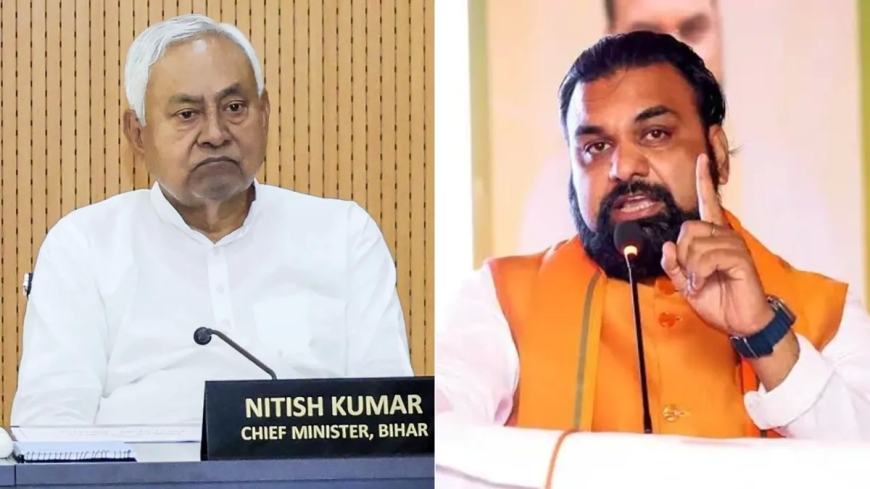
A fresh research report recommending the removal of Bihar’s decade-old liquor ban has triggered a political debate in the state. While lifting prohibition could provide a significant boost to the government’s revenue, the ruling BJP is unlikely to take a quick decision on the issue because of the political sensitivity surrounding former Chief Minister Nitish Kumar.
The National Council of Applied Economic Research (NCAER) has recommended that Bihar reconsider its complete prohibition policy, pointing to revenue losses, enforcement difficulties and the continued availability of illegal liquor and alternative intoxicants.
The report has given the Opposition RJD an opportunity to attack the state government, while leaders of several NDA allies have maintained that the existing ban should instead be implemented more strictly.
Why Is the Liquor Ban Back in Focus?
Bihar completed 10 years of complete prohibition in April 2026. Nitish Kumar introduced the ban in April 2016, with reducing alcohol consumption and addressing issues such as crimes against women among the key objectives behind the decision.
However, a recent NCAER study has questioned whether the policy has achieved its intended results.
The research paper, titled “Macro perspective of Bihar’s development achievements: Unfinished agenda and the way forward”, was presented at the India Policy Forum last week.
The study noted the growth of an illicit liquor market and an increase in the use of alternative intoxicants after prohibition was introduced.
According to the report, legal alcohol consumption was replaced to a significant extent by bootlegging, illegal liquor trade and the use of other intoxicating substances.
Report Points to Major Revenue Loss
One of the biggest concerns highlighted by the study is the financial impact of prohibition on the Bihar government.
The report estimated that removing the liquor ban could increase the state's revenue by around 14 to 15 per cent. Bihar currently generates approximately Rs 65,000 crore in annual revenue.
The study argued that bringing alcohol sales back under a regulated system and imposing excise duties could create an important source of additional revenue for the state.
The funds could potentially be used for sectors such as healthcare, education, infrastructure and employment generation.
Why BJP Is Hesitant to Change the Policy
The BJP is reportedly aware of the potential financial benefits of lifting or partially relaxing the liquor ban. However, the issue is politically sensitive because of Nitish Kumar, who has remained closely associated with the prohibition policy since its introduction.
A BJP source said discussions are taking place within the ruling alliance about the impact of the ban. The source pointed to the growth of alternative intoxicants, an illegal liquor economy and difficulties for the hospitality sector.
However, the source also indicated that the government is unlikely to make an immediate change.
Any major alteration to the prohibition policy could be seen as a political setback for Nitish Kumar. As a result, the BJP is expected to proceed cautiously before deciding whether the policy needs to be changed.
What Are NDA Allies Saying?
There is no uniform view within the NDA on whether Bihar should continue with complete prohibition.
The JD(U)'s official position remains in favour of the liquor ban. However, party MP Devesh Chandra Thakur has called for a review, saying that liquor prohibition has not succeeded anywhere.
Union Minister and Lok Janshakti Party (Ram Vilas) chief Chirag Paswan said Bihar needs to find ways to increase its revenue but argued that this does not automatically mean the liquor ban should be removed.
Hindustani Awam Morcha (Secular) chief and Union Minister Jitan Ram Manjhi suggested that Bihar should follow the Gujarat model and focus on stricter enforcement of prohibition.
Chief Minister Samrat Choudhary has also previously made it clear that his government does not intend to revisit the state's liquor policy.
RJD Says Government Has Failed to Implement Ban
The report has also provided an opportunity for the RJD to target the state government.
RJD national spokesperson Subodh Kumar Mehta said the study reflected what he described as the failure of the government to implement the policy effectively.
He said political parties had earlier supported the liquor ban and maintained that his party continued to support prohibition. However, he argued that the study showed the emergence of a parallel illegal liquor economy.
The RJD spokesperson also suggested that the government could eventually explore a partial or complete change in the prohibition policy.
What Did the NCAER Study Recommend?
The NCAER report highlighted several problems linked to the implementation of prohibition, including alleged corruption, pressure on law enforcement agencies and public health risks caused by unregulated and potentially dangerous spurious liquor.
The study also warned about the rapid growth of illegal drug markets and alternative intoxicants.
Instead of continuing with a complete ban, the economists recommended a return to regulated alcohol sales accompanied by excise taxation.
According to the report, reinstating excise duties could reduce the resources required for enforcement while generating additional tax revenue for important public sectors.
Will Bihar Remove the Liquor Ban?
For now, there appears to be no immediate plan to withdraw prohibition in Bihar.
The NCAER study has strengthened the argument for reviewing the policy, particularly from the perspective of revenue and enforcement. However, the political implications make the decision complicated for the BJP-led government.
With different NDA leaders expressing different views and Nitish Kumar's association with the prohibition policy remaining an important factor, any decision to change the law is likely to require careful political consideration.
For now, Bihar's liquor ban remains in place, while discussions over its economic and social impact are likely to continue.
What's Your Reaction?